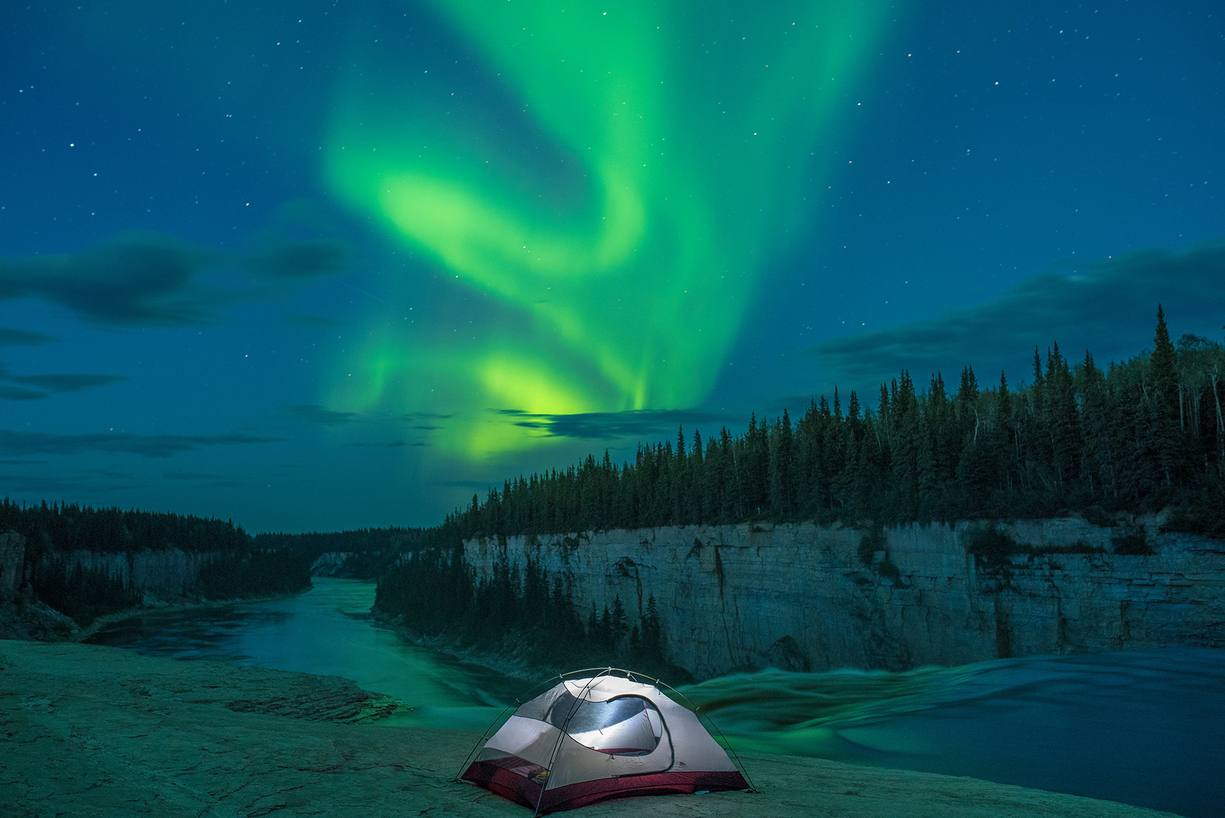
As summer fades and the nights grow longer, the Northwest Territories shifts into one of its most magical seasons. The longer nights mark the start of the Fall Aurora season. From mid-August to early October, ribbons of green, purple, and red sweep across the sky, often without the deep cold of winter. This is one of the best places in the world to experience the Northern Lights, offering up to 240 nights of activity each year.
On the ground, the transformation is just as stunning. In the boreal forest, birch and poplar leaves turn rich shades of yellow and amber, while the tundra glows with the deep reds of low plants, mosses, and lichens. By mid-September, the land is carpeted in colour, creating an incredible backdrop for nature photography.
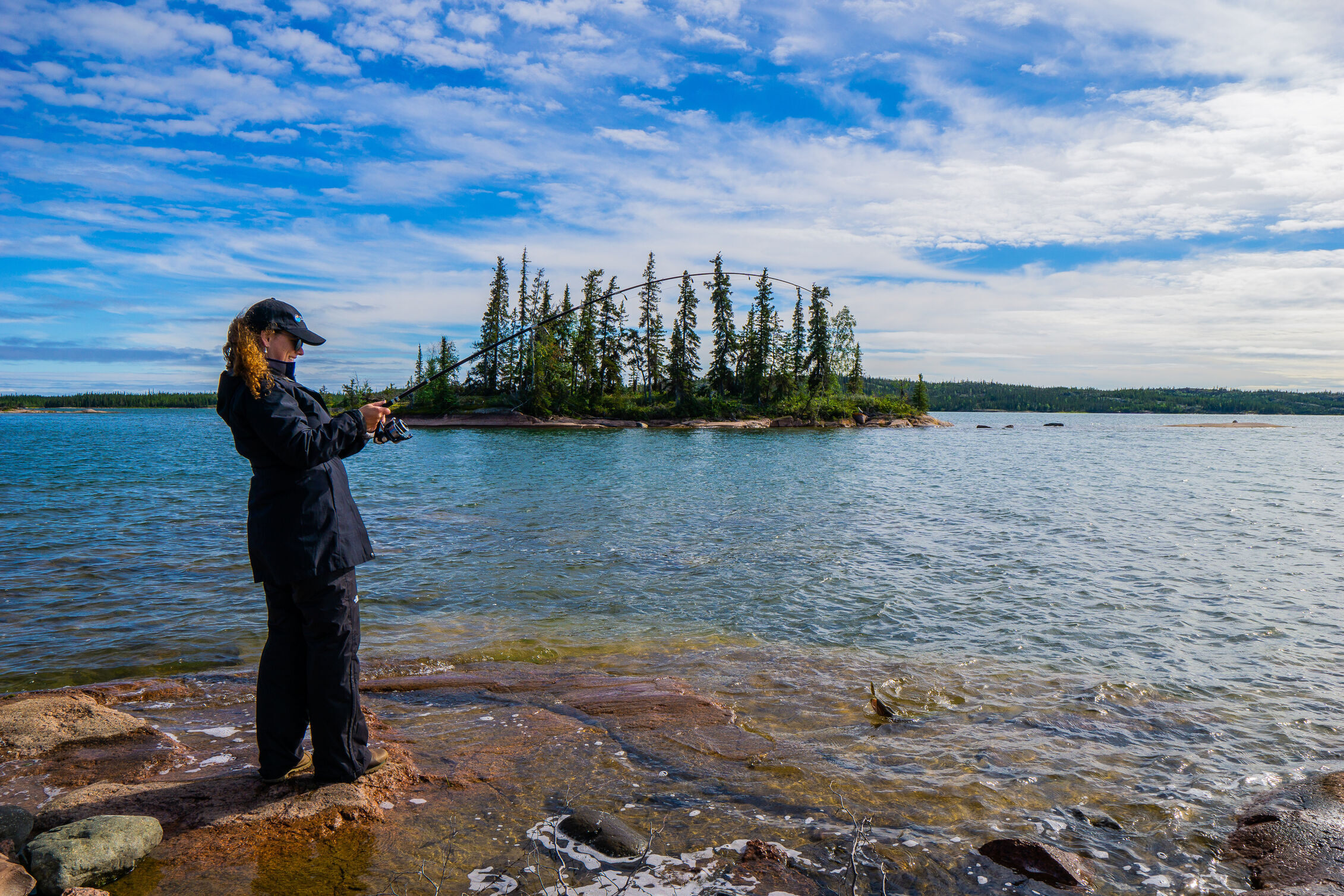
Fall is also the final chapter of the open-water season, before the waters freeze over for winter. Lakes are calm and clear, perfect for one last paddle in a canoe or kayak. Cooling water draws some fish closer to the surface, making autumn a rewarding time for fishing in the NWT. Trails like the Twin Falls Gorge or the route to Cameron Falls offer crisp air, fewer insects, and unforgettable viewpoints, many within territorial and national parks. Late August also brings the Dark Sky Festival in Fort Smith, where stargazing and Aurora viewing take centre stage inside the world’s largest Dark Sky Preserve.
Autumn is harvest time in the North, when an abundance of berries such as cranberries, blueberries, and cloudberries ripen along ridges and roadways, especially near the Inuvik–Tuktoyaktuk Highway. Many communities welcome visitors to experience seasonal traditions such as berry picking, fishing, and celebrations. Book an experience with an Indigenous tourism operator to learn firsthand about the skills and knowledge that have been passed down for generations.
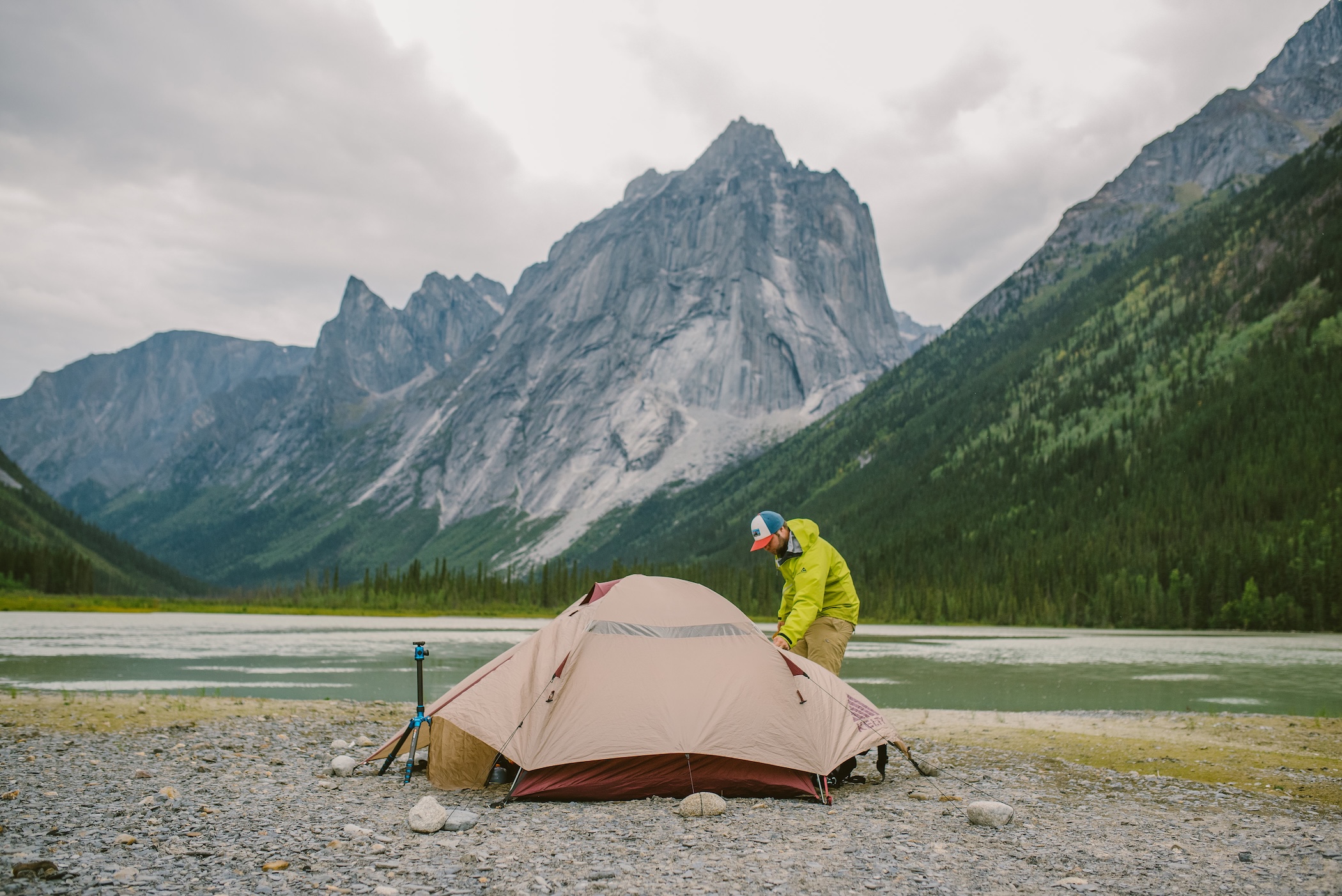
As you plan your adventure, expect temperatures to be cool and comfortable. Average highs range from 19 °C (66 °F) in late August to around 3 °C (37 °F) in early October, while average lows drop from 7 °C (45 °F) in late August to −2 °C (28 °F) by early October. Nights can dip below freezing, and the first snow often makes a brief appearance. With warm layers and the right gear, these crisp, clear days and chilly nights are perfect for exploring the Northwest Territories.